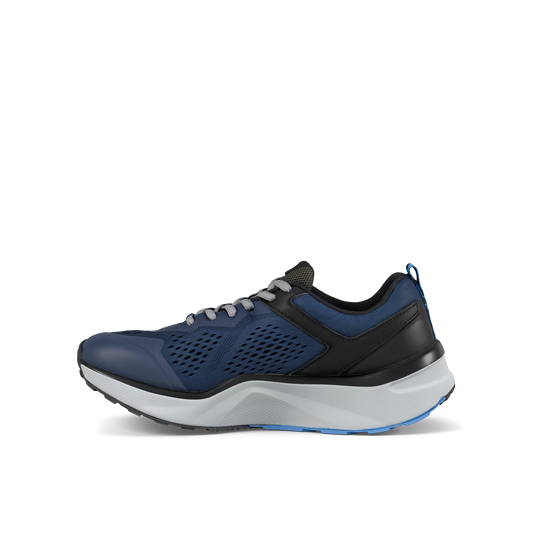
Which shoes are suitable for therapists?

Ratgeber Profession | Shoes for therapists

Therapists often spend many hours standing and walking during their work in practices, rehabilitation centres or clinics. Suitable shoes should therefore fit well, provide comfortable cushioning, offer secure support and remain comfortable even when worn for extended periods.

Joya develops comfort-oriented shoes with different fits and a harmonious rolling motion. Depending on the workplace, they may be of interest to therapists who spend long working days standing or walking.

Note: The requirements for occupational footwear vary depending on the therapeutic field. Hygiene, safety, slip-resistance and other workplace requirements of the respective employer must be taken into account when choosing footwear.

Is this topic relevant to me?

  • You work as a physiotherapist
  • You work as an occupational therapist
  • You work as a therapist in a practice, rehabilitation centre or clinic
  • You stand for many hours during treatments
  • You frequently walk between treatment rooms or wards
  • You are looking for comfortable shoes for long working days

Suitable for

  • Prolonged standing
  • Long walking distances in everyday practice or clinic work
  • Hard floor surfaces
  • Long working days
  • Frequent changes between walking and standing
  • Ill-fitting footwear
  • High daily strain
  • Few recovery periods during the working day
  • Pressure points caused by an unsuitable fit
  • Job-specific footwear requirements

What role does the shoe play?

Walking, prolonged standing and active treatment situations alternate during a therapist's working day. Suitable footwear should therefore remain comfortable for many hours while also matching the specific working environment.

What matters in shoes for therapists

  • Good fit – secure support without pressure points.
  • Comfortable cushioning – can increase comfort on hard floors.
  • Secure heel fit – supports a stable fit while walking.
  • Harmonious rolling motion – supports a comfortable walking experience over longer distances.
  • Workplace-suitable features – hygiene, cleaning and any required safety or slip-resistance features must be taken into account.

In brief

Depending on their activities, therapists spend a lot of time standing and walking.

A good fit is essential for lasting comfort when wearing shoes.

Comfortable cushioning can be beneficial on hard floors.

The shoe must suit the specific therapeutic workplace.

Workplace hygiene and safety requirements take priority over general comfort recommendations.

Persistent foot, knee or back problems should be medically assessed to determine the cause.

Buying guide

When choosing shoes for a therapist's working day, comfort and workplace requirements should be considered together.

Anprobe-Tipp Warum
Try them on with typical work socks The fit should reflect actual use
Try them on in the afternoon or evening Feet may be slightly larger after a long working day
Walk and stand for a few minutes Test comfort under typical loads
Check the heel fit The shoe should fit securely without pressing
Ensure sufficient toe room Particularly important when shoes are worn for long periods
Check workplace requirements Take hygiene, cleaning and any slip-resistance or safety requirements into account

Joya develops shoes with a focus on high walking comfort. Depending on the model, they feature:

  • comfortable cushioning thanks to FOREVERFOAM®
  • different lasts and fits
  • harmonious rolling motion
  • high-quality materials such as leather and mesh
  • various models for everyday use, work and long periods of walking and standing

Which models are suitable for a therapist's working day depends on the specific workplace, workplace requirements and individual foot shape. A personal fitting is recommended.

Frequently asked questions

Which shoes are suitable for therapists?
Suitable shoes fit well, are comfortable, provide pleasant cushioning and offer secure support, provided they meet the hygiene and safety requirements of the respective workplace.
Are Joya shoes suitable for therapists?
Depending on the model and workplace, Joya shoes may be of interest to therapists who walk or stand a lot. However, the specific workplace requirements must be checked.
Which shoes are suitable for physiotherapists?
For everyday physiotherapy work, a good fit, comfortable cushioning, secure support and a comfortable walking experience over longer periods are important.
Are soft shoes better for therapists?
Not necessarily. A balanced combination of cushioning, stability, fit and workplace requirements is decisive.
Are Joya shoes slip-resistant?
The features vary depending on the model. If a specific level of slip resistance is required at the workplace, it must be checked whether the particular model meets the required specifications.
Can I wear Joya shoes during an entire work shift?
Many Joya models are designed to provide a high level of walking comfort. Whether a model is suitable for a complete work shift depends on its fit, the workplace and individual requirements.
Which materials are suitable for everyday therapeutic work?
This depends on the hygiene and cleaning requirements of the workplace. Materials should be suitable for the intended use and able to be cared for in accordance with workplace requirements.
Can I use orthopaedic insoles?
Depending on the Joya model, individual insoles may be used. Bring the insole to the fitting so that the interior volume and fit can be checked.
Which shoes are suitable for therapists in a practice?
Depending on the activity, comfortable casual or business models may be suitable. The decisive factors are the applicable hygiene, safety and dress-code requirements.
How do I find the right Joya shoe for my working day?
In addition to shoe size and foot shape, the area of use, daily walking and standing times, and workplace requirements should be taken into account. A fitting is recommended.
When should I have work-related foot problems assessed?
Persistent pain, swelling, numbness or significant limitations when walking or standing should be medically assessed.

Related Topics